Segmentation
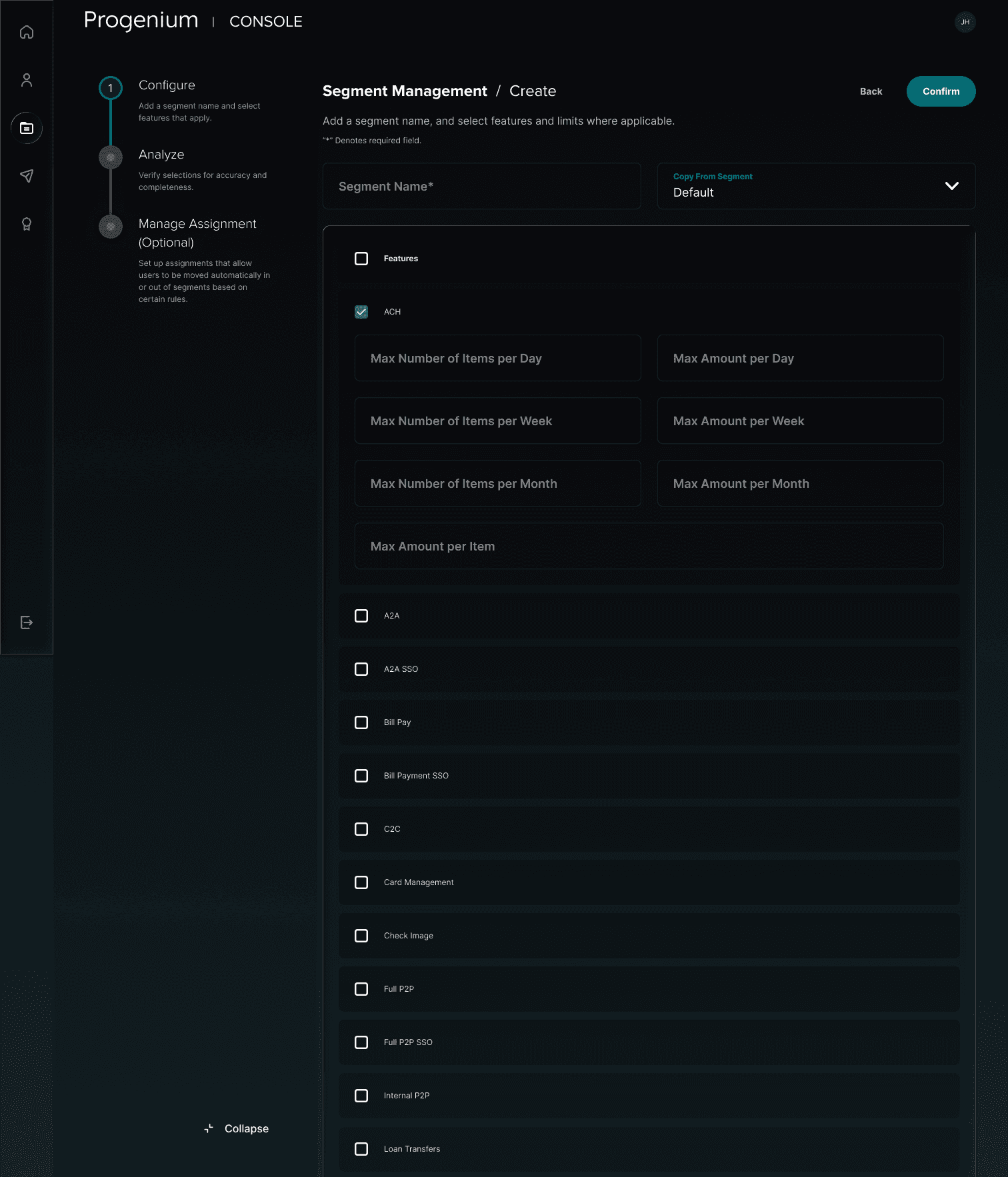
Progenium Console - Concept Recreation of USMM Console due to NDA. Flow and thinking reflect shipped product.
Context
The "Progenium" Console is the administrative layer used by financial institutions to manage their end users across both consumer and business applications.
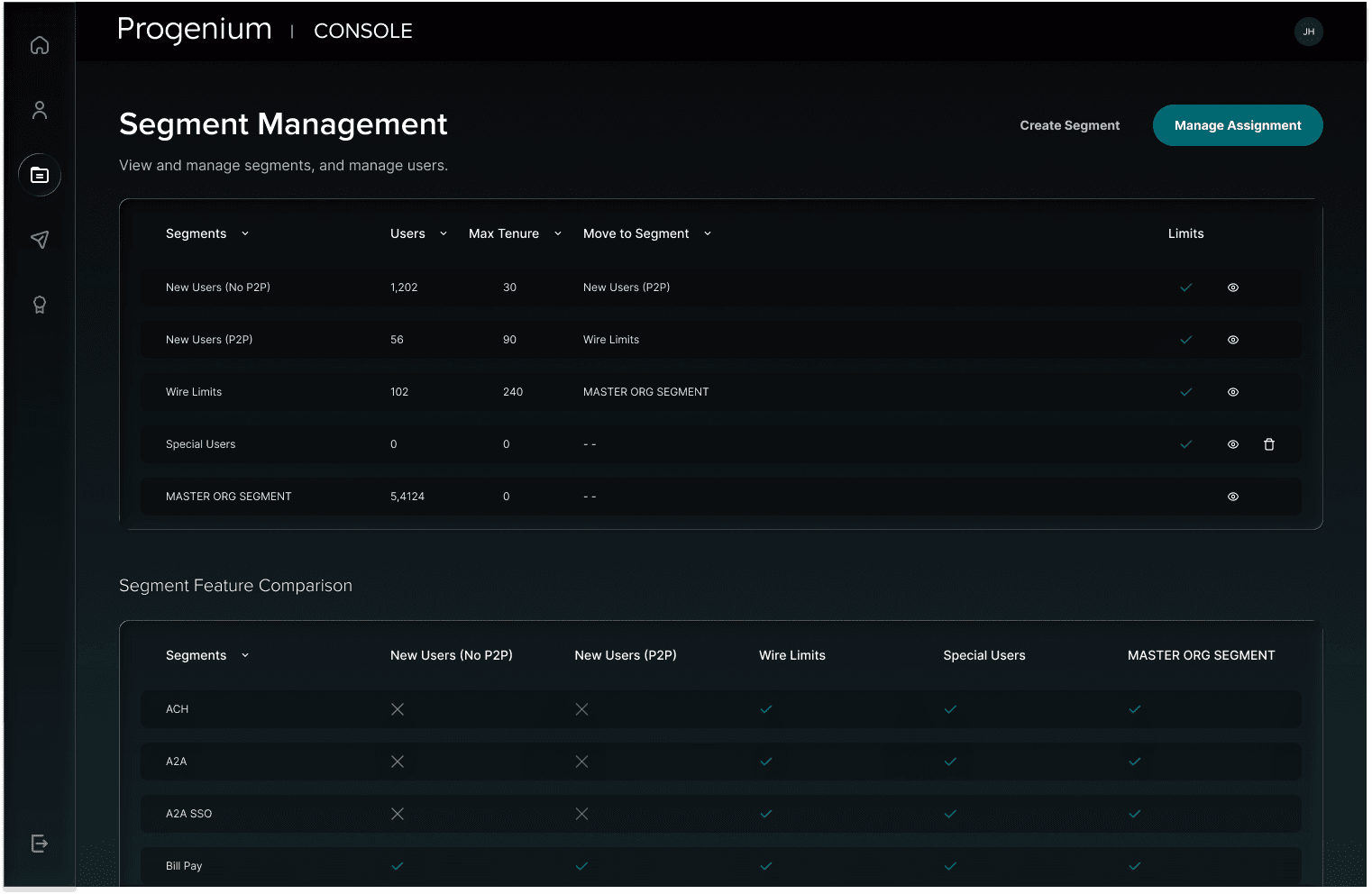
One of its most critical capabilities is Segment Management — the ability for admins to group users into defined buckets and control what features those users can access.
Situation
The existing segment creation flow was clunky, rigid, and surprisingly limited for a platform of its age. It didn’t support feature limits like:
Amount per item
Amount within a time period
Number of actions
Qualification based on tenure
For institutions that need granular control over risk and access, that gap was significant. And we needed to fix it in a single sprint.
Dashboard - Segment Managment
Actions taken
I began by auditing the existing flow and mapping friction points. While the interface looked dated, I realized the core issue wasn’t visual — it was structural. Users were forced to make decisions too early without proper context, and the system lacked the configurability our clients required.
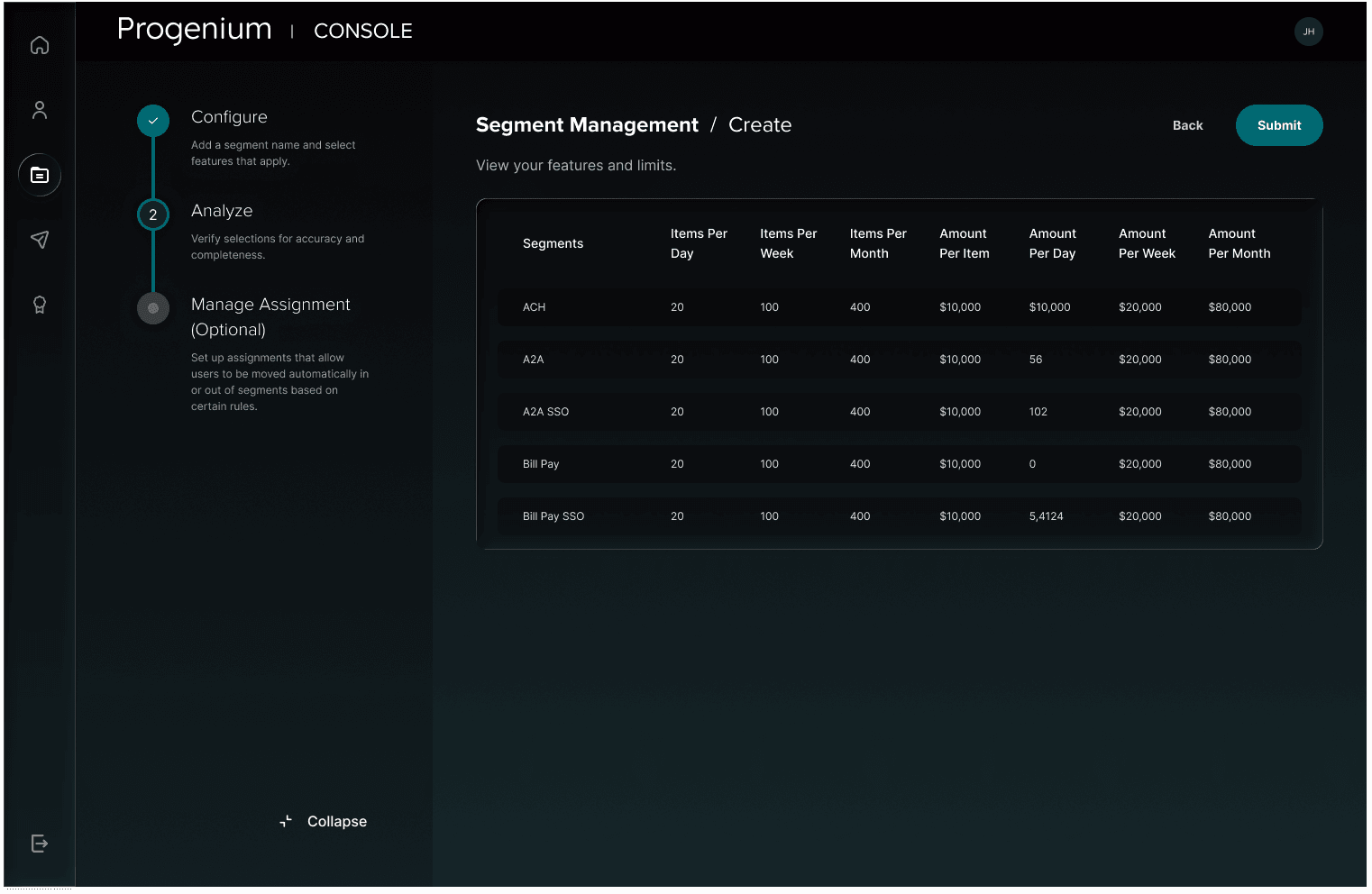
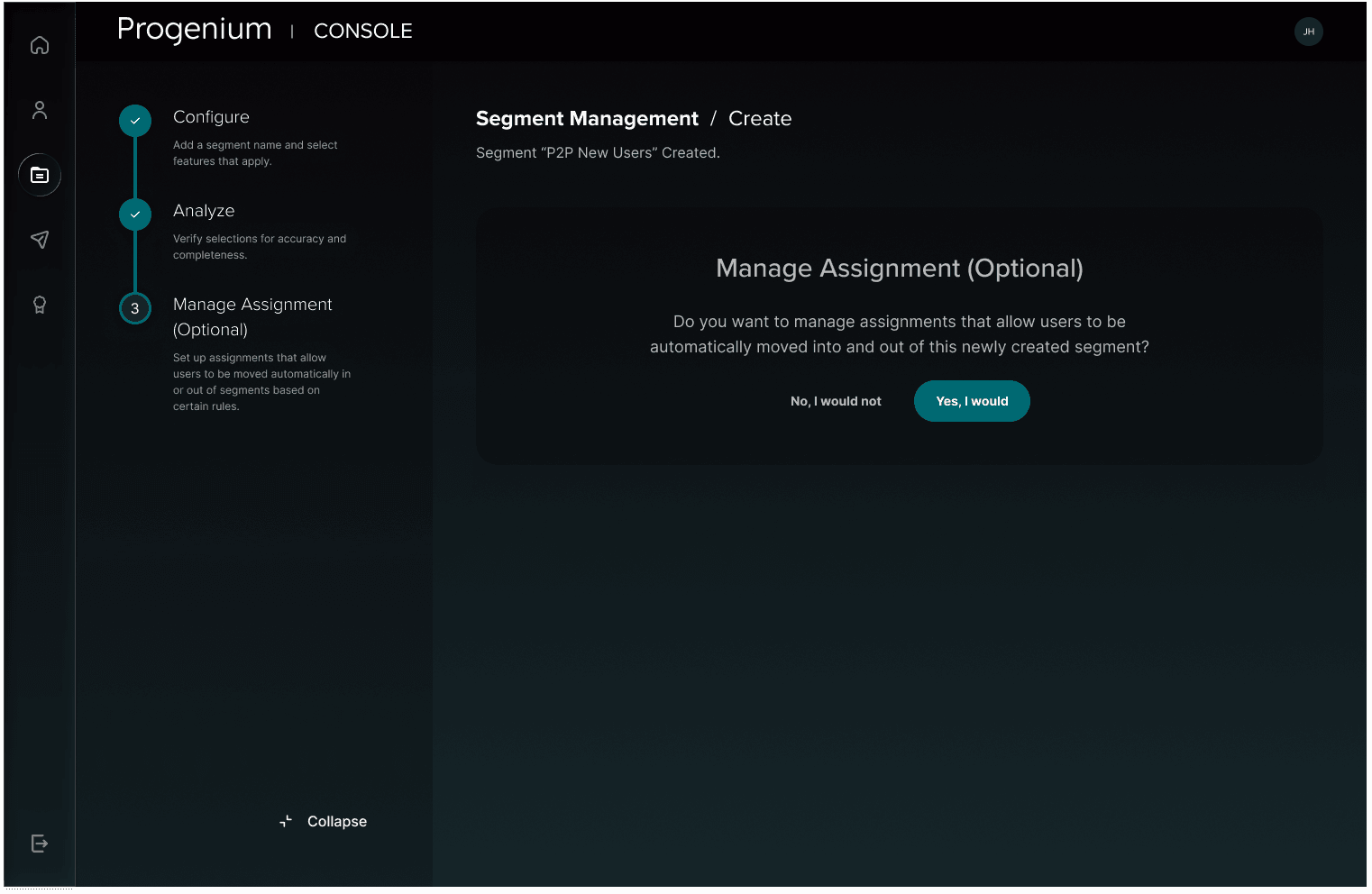
I structured the redesigned experience into a three-stage flow:
Define Segment Configure feature access and limits
Review and confirm
Manage User Assignments (Optional)
This sequencing was intentional. Admins first establish what the segment is while configuring limits, reducing premature decision-making and mental overload.
To support enhanced control, I introduced:
Configurable quantity-based limits
Time-based constraints
Clear qualification logic (including tenure-based rules)
Improved visual hierarchy to reduce clutter
Given inconsistencies in the BRDs and user stories, I scheduled direct working sessions with the Product Manager to clarify edge cases and understand the underlying intent behind the feature. This reduced iteration cycles and aligned the experience with real client needs rather than incomplete documentation.
I had full ownership of layout, interaction structure, and flow logic, which allowed me to design around user cognition instead of legacy interface constraints.
Results
The redesigned flow reduced segment creation time by 58%, indicating a significant improvement in efficiency and usability.
Beyond speed, the update:
Introduced feature limit capabilities that previously did not exist
Reduced user confusion during configuration
Increased admin confidence in managing permissions
We received strong qualitative feedback from clients regarding the improved clarity and overall polish of the Console. The enhancements also contributed to signing new clients who had previously expressed concerns about configurability.
Reflection
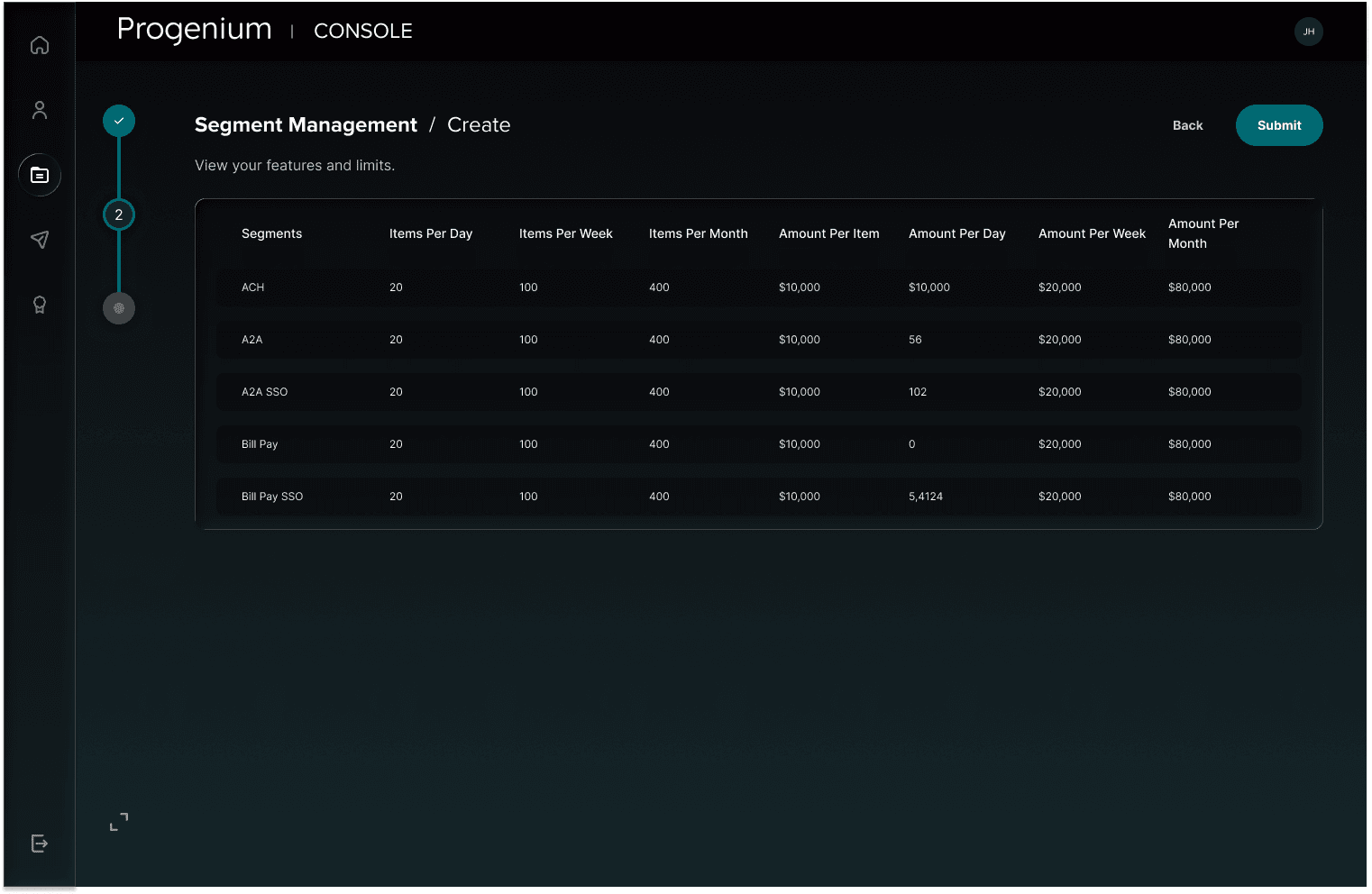
If I were to refine the feature further, I would allow the instructional stepper to collapse after initial use. While it supported first-time users, locking it open limited efficiency for experienced admins. In the portfolio concept version, I’ve incorporated that improvement to reflect how my thinking has evolved.