AI Translation
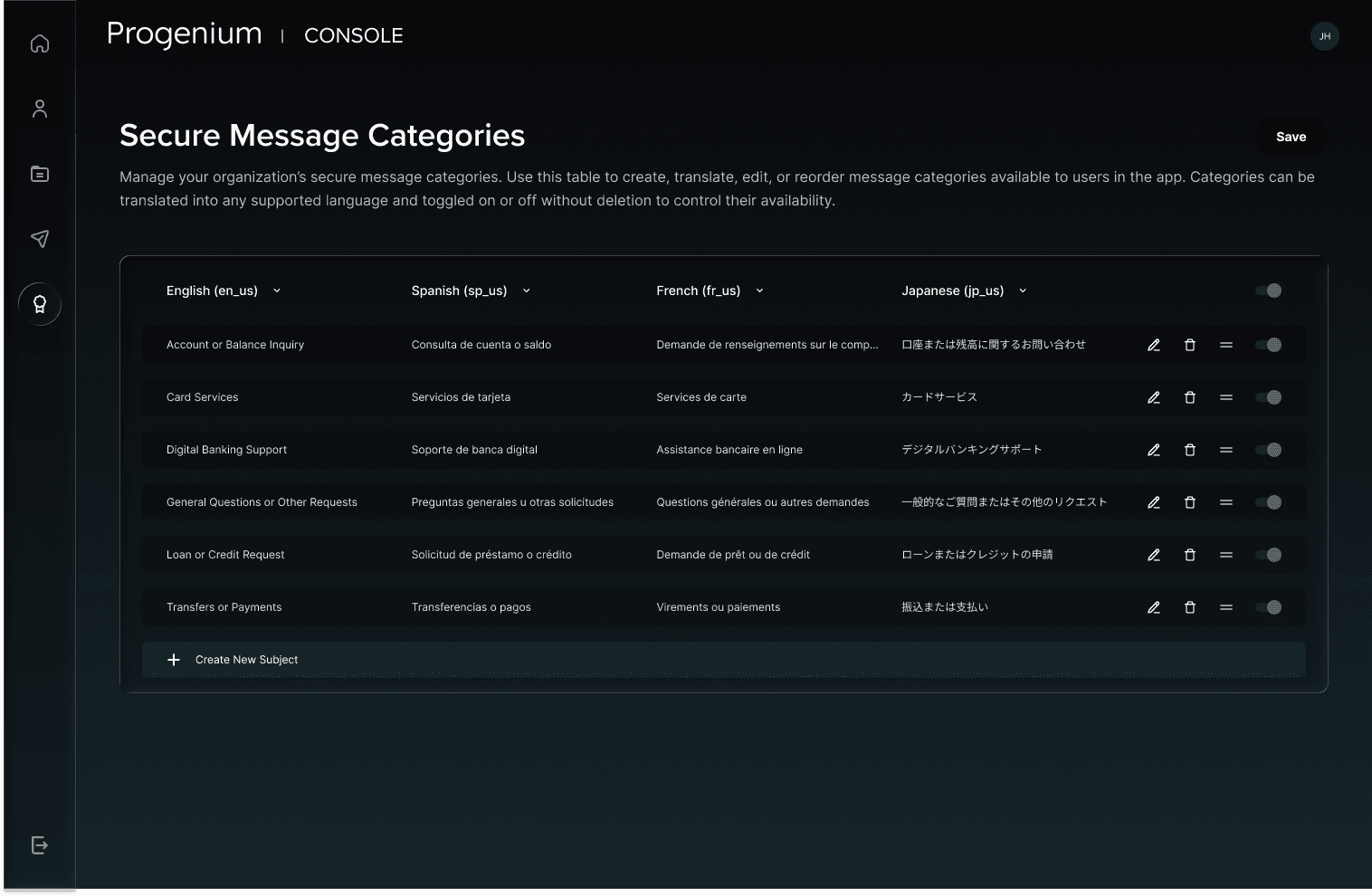
Progenium Console - Concept Recreation of USMM Console due to NDA. Flow and thinking reflect shipped product.
Context
The "Progenium" Console is the administrative layer used by financial institutions to manage their end users across both consumer and business applications.
As part of a broader self-service initiative within the USMM Console, we aimed to give financial institutions more direct control over their platform experience.
Situation
One key area was Secure Message Categories — the labels end users see when sending secure messages. Previously, these categories were managed in a fragmented way, especially across multiple languages. Each language lived in separate tabs, creating misalignment and making it difficult to ensure consistency between translations.
For institutions operating in multiple languages, this workflow was tedious and prone to error.
The redesign needed to be completed within a single sprint.
Role
As the sole Product Designer across four lines of business, I was responsible for:
Redesigning the Secure Message Categories management experience
Improving clarity and scalability across multiple languages
Creating a more efficient self-service workflow
Ensuring the redesign did not increase complexity or slow down admins
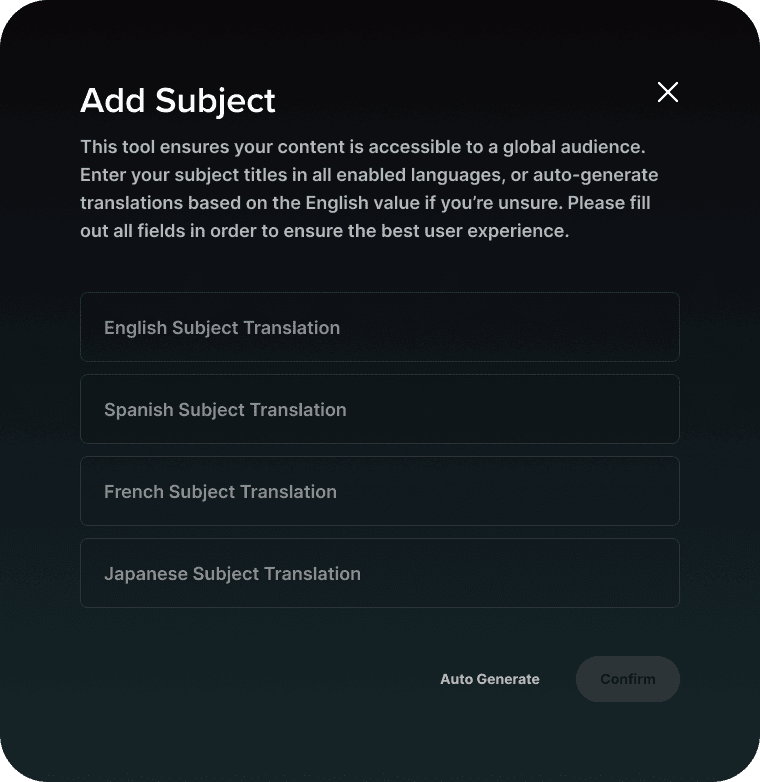
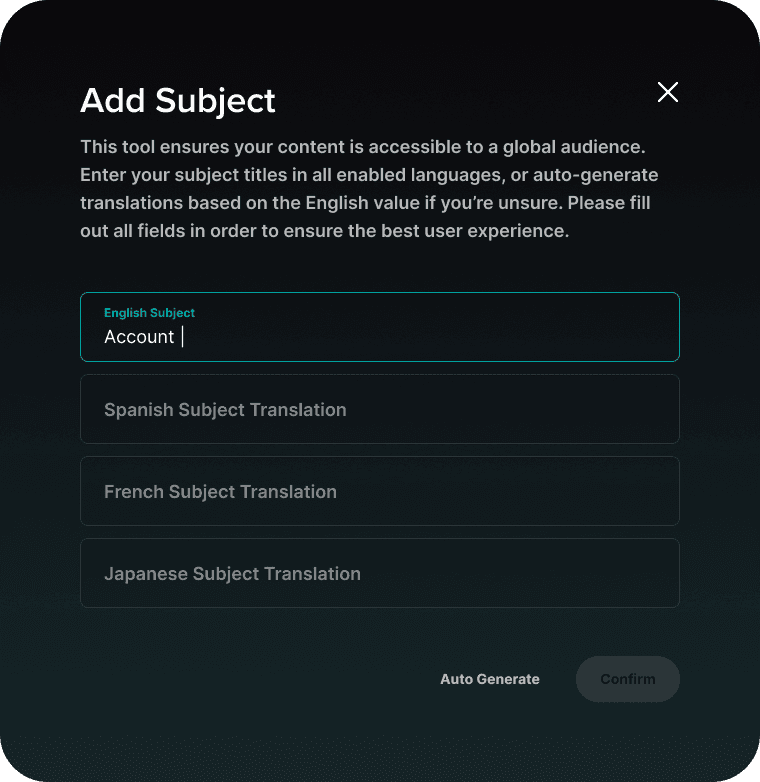
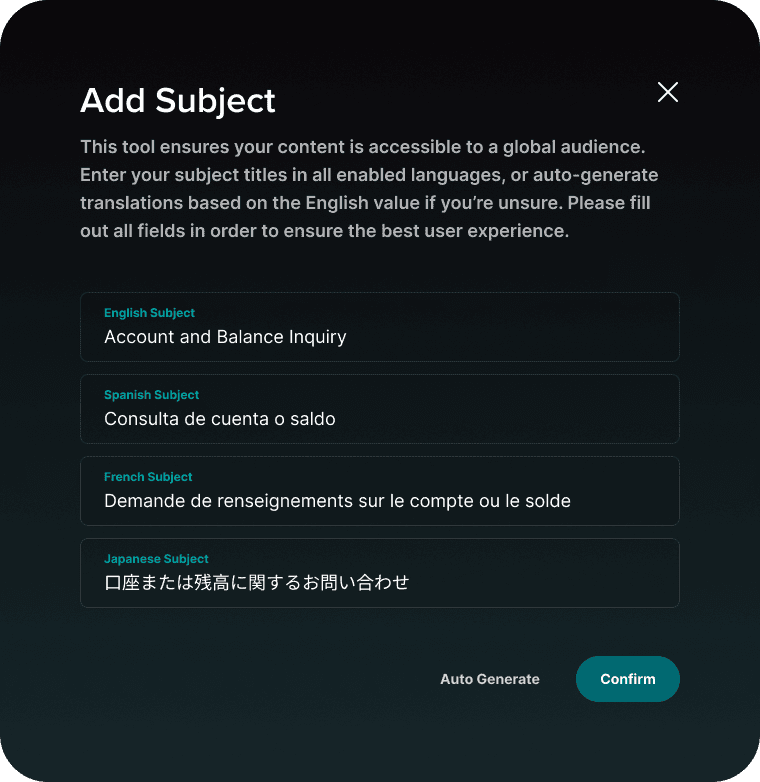
In addition, I identified an opportunity to enhance the feature further by proposing AI-assisted translation using LLMs to help institutions manage multilingual content more accurately and efficiently.
Dashboard - Segment Managment
Actions taken
I began by analyzing the legacy experience. The core issue wasn’t just visual — it was structural. Languages were separated into tabs, forcing administrators to edit categories one language at a time.
This:
Increased the risk of inconsistencies
Slowed down updates
Made it difficult to verify alignment across languages
Structural Redesign
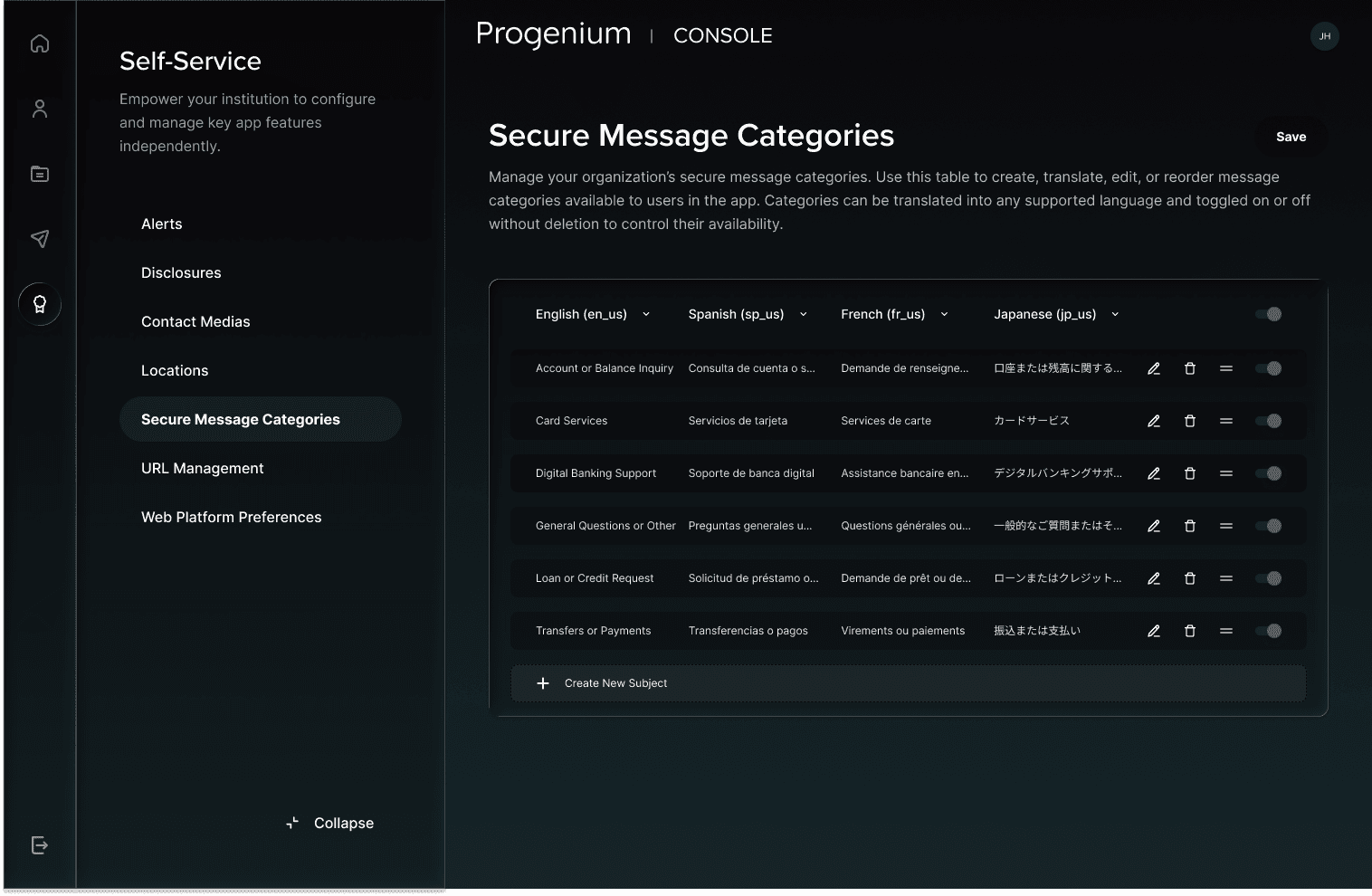
I redesigned the table to display all languages within a single unified view. This allowed admins to:
Compare translations side-by-side
Edit multiple language fields within the same workflow
Maintain alignment across secure message headers
I also introduced a more streamlined editing flow, enabling updates across languages in a consolidated process instead of navigating back and forth between tabs.
The goal was not just efficiency — it was accuracy and visibility.
AI Proposal
While working through the redesign, I proposed integrating LLM-powered real-time translation assistance. Many institutions support multiple languages but lack in-house translation expertise.
The proposed flow would:
Allow admins to input content in a primary language
Generate real-time translation suggestions
Enable review and refinement before publishing
This would reduce friction, improve translation consistency, and increase confidence in multilingual deployments. Due to time constraints and limited internal experience with LLM integrations, the AI component was not implemented during this sprint. However, I included the forward-looking flow in my portfolio concept to demonstrate how the feature could evolve.
Navigating Roadblocks
Although the feature seemed straightforward, we encountered unexpected backend resistance. Certain development constraints made it difficult to merge language tables into a fully unified structure.
In the shipped version, we had to partially revert the combined-table approach due to technical pushback around backend restructuring.
Rather than framing this as purely a limitation, it reinforced an important lesson for me: strong design vision must also account for organizational and technical realities. I worked within those constraints while still improving clarity and workflow wherever possible.
Results
Following the redesign:
We saw a significant reduction in customization requests related to Secure Message Categories.
Clients provided strong qualitative feedback about the improved clarity and overall Console polish.
The broader self-service enhancements contributed to increased client confidence and helped support new client signings.
While the AI translation component was not implemented, the proposal sparked internal discussion about expanding intelligent tooling within the Console, positioning the platform for future innovation.
Reflection
If revisiting this project today, I would push harder for:
A fully unified language table architecture (As shown in these concepts)
Implementation of the LLM-powered translation workflow
From a design perspective, I wouldn’t change the structure or flow. The experience improved visibility, reduced friction, and aligned with how administrators actually work.
This project strengthened my ability to:
Design within organizational constraints
Advocate for forward-thinking solutions
Balance ideal UX with real technical limitations